For many women, the throbbing pain in the lower abdomen or back during periods is often brushed off as something to “just deal with”. But for those with severe dysmenorrhea, the experience can go far beyond typical discomfort.
Dysmenorrhea is the clinical term for painful menstrual cramps (Cleveland Clinic), which can range from mild discomfort to intense pain that disrupts daily life.
Emerging research suggests that dysmenorrhea is not only about strong uterine contractions, but it may also involve how the brain processes pain.
Traditionally, menstrual cramps have been explained as the result of uterine muscles contracting to shed the lining. While this is true, it is only one part of the picture.
Research shows that severely dysmenorrheic individuals may experience changes in central pain modulation (frontiers)
If we break this down, it means that
The same physical stimulus can feel more intense
Pain signals may be amplified or prolonged
The nervous system becomes more sensitive to discomfort (National Library of Medicine)
In other words, severe dysmenorrhea is not just about stronger cramps but also about heightened pain response.
Now that we know dysmenorrhea is partially a neurological pain condition, we should reframe the way we view relief.
If pain is being amplified by the nervous system, a more effective pain management method should not just be targeting the uterus, it should also help relax muscles, improve blood flow, and reduce pain signals.
This is where non-pharmacological approaches come into play.
Heat therapy is one of the most widely recommended natural remedies for menstrual pain.
Studies have shown that when heat is applied to the lower abdomen, it can
Relax the uterine and abdominal muscles, which reduces cramping intensity
Improve pelvic blood circulation, helping oxygen reach tissues
Reduce the tightening of blood vessels that can cause pain
Ease pressure and discomfort in the pelvic area
These physiological effects reduce menstrual pain.
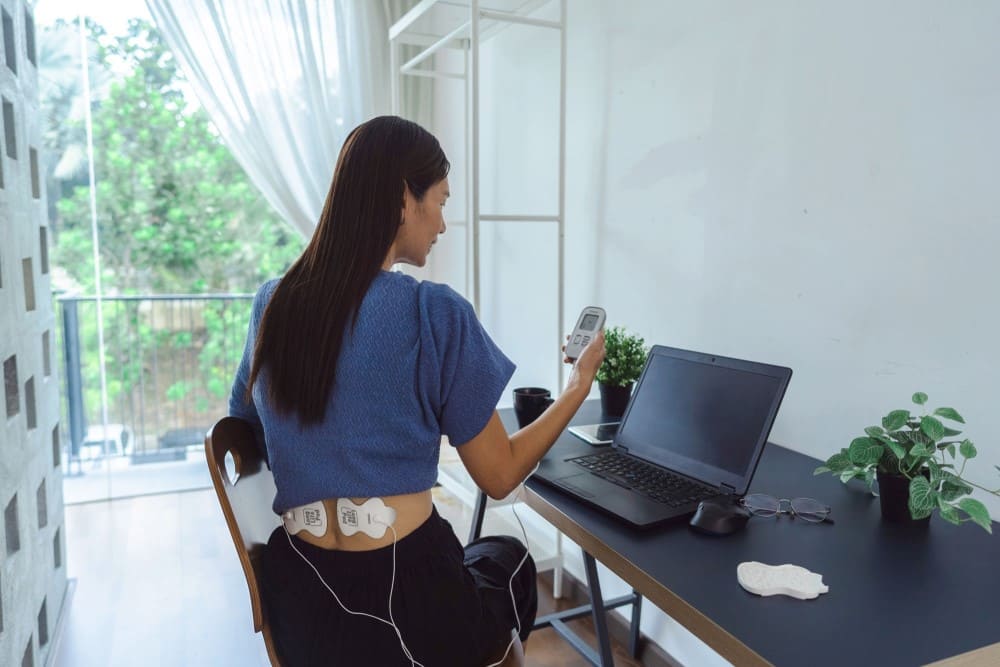
Another drug-free solution is Transcutaneous Electrical Nerve Stimulation (TENS).
TENS delivers gentle electrical impulses through the skin, which
Stimulates sensory nerves to block pain signals from travelling to the brain
Encourage the release of endorphins (the body’s natural painkillers)
Loosens tight muscles, which improves blood circulation
Some studies, including those referenced by Cleveland Clinic and National Library of Medicine, suggest that TENS can help reduce pain intensity in dysmenorrheic individuals.
TENS can also be used with heat therapy to ease menstrual cramps and regulate pain.
Some examples of TENS devices include:
1. Electronic Nerve Stimulator HV-F021

This device uses TENS technology to deliver electrical stimulation through the skin.
Pain can vary by area, intensity, and time—what works for your shoulder may not work for your back. The HV-F021 has 6 different body area modes, 3 massage types, and 20 adjustable intensity levels. With multiple settings and modes, you can tailor each session to suit your needs.
The device is compact with pads that can be washed up to 10 times for 150 applications.
2. Electronic Nerve Stimulator HV-F311

This model combines TENS with heat therapy.
Users can apply electrical stimulation, heat, or both depending on preference. It has 2 temperature options, 6 adjustable body area modes, 3 massage modes, and 20 intensity levels for you to fully customise your therapy session for your comfort.
It is portable and powered by a rechargeable battery.
Sometimes, it’s about choosing the smarter solution. Understanding the science behind dysmenorrhea helps you find more targeted and effective pain relief methods that fit your needs.
Next time cramps strike, consider solutions like TENS or heat therapy. Take control by working with your body’s pain mechanisms, not just the symptoms.
|
Previous article A Closer Look at Knee Pain: Understanding, Managing, and Breaking the Cycle |
Next article |