




Wrist Blood Pressure Monitor HEM-6161
The HEM-6161 makes it easy to monitor blood pressure while on-the-go. This basic model comes with cuff wrap guide and irregular heartbeat detection to ensure the monitor is used correctly.
 (54 Reviews)
Buy Online Now


Clinically validated for accuracy in general population

 Provides fully automatic and personalised inflation that adapts to your arm, along with swift deflation for both efficiency and comfort in every use

Stores 30 Measurements in Memory
Monitor, Batteries (2x AAA), Storage Case, Instruction Manual, Warranty Card
- Type of Blood Pressure Monitors Wrist
- Bluetooth Connectivity No
- Label Standard
- Included Cuff Type Pre-formed Cuff
- Intellisense Technology Yes
- Intellisense AFib Technology No
- Cuff Wrapping Guide Yes
- Average of Last Readings No
- Trend Indicator No
- Body Movement Detection No
- Irregular Heartbeat Detection Yes
- Hypertension Indicator No
- Memory 30
- No. of Users 1
- Pulse No
- Storage Case Included Yes
- Adapter Included -
- Measurement Posture Guide No
In the most basic sense, blood pressure is a way of measuring how much force is being exerted on the walls of your blood vessels as blood flows through them.
Systolic blood pressure (the upper number on the blood pressure monitor) is the highest pressure in blood vessels when the heart contracts/beats.
Diastolic blood pressure (the lower number on the blood pressure monitor) is the lowest pressure in blood vessels in between heartbeats when the heart muscle relaxes.
Hypertension occurs when the systolic blood pressure is equal to/greater than 135 mmHg & the diastolic blood pressure is equal to/greater than 80 mmHg. If left uncontrolled, hypertension can cause heart attack, stroke, dementia, kidney failure, vision loss amongst the serious consequences.
Yes, it is quite normal for people’s blood pressure to change throughout the day & night, or in different settings where you may measure your blood pressure. Many things, such as stress levels, food or drink intake, activity levels, even time of day can all affect a person’s blood pressure reading at any given time. In fact, there are published studies that show a given person’s blood pressure can change by up to 20mm within a day, based on activity levels, food/drink intake, stress, etc. This is why it is important to take your blood pressure on a regular basis, & review the overall trend of your blood pressure readings with your doctor.
One should not be too concerned about one single measurement. It is important to take measurements every day at the same time & to know one’s own BP trend, as BP continually changes throughout the day due to the daily fluctuation cycle & many other factors.
It is optimal to measure blood pressure within 1 hour after you get up in the morning & before you go to bed at night.
If you measure your blood pressure in the morning, take the measurement within 1 hour after you get up; before having breakfast & after visiting the restroom, rest for 1-2 minutes & then take the measurement in a sitting position.
If you measure your blood pressure at night, after resting for 1-2 minutes, take the measurement in a sitting position before you go to bed.
It is recommended to take the measurement at the same time period every day.
Yes, you will see some differences. This is normal & can occur for many reasons. Some of the more common reasons are:
1. A person’s blood pressure varies throughout the day, so at any given moment your blood pressure can change.
2. In terms of the amount of change; there are published studies that show a given person’s blood pressure can change by up to 20 mm within a day, based on activity levels, food/drink intake, stress, etc.
3. You may have a condition known as “White Coat Hypertension.” This is a condition in which a blood person’s blood pressure rises above its usual level when it is measured in a doctor’s office or clinical setting.
4. You may have a condition known as “Masked Hypertension.” This is a situation in which a person’s blood pressure falls below its usual level when it measure in a doctor’s office or clinical setting.
So do not be alarmed when you see differences between your readings at home compared to your readings in your doctor’s office. Discuss it with your doctor to get the best overall picture of your heart health.
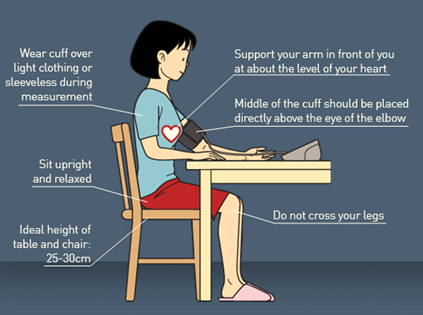
1. Sit quietly for about 5 minutes with both feet flat on the floor.
2. Do not smoke, bathe, drink caffeinated drinks/alcohol or exercise 30 minutes before measurement
3. Measure at the same time every day
4. Take multiple readings & record the results using a diary or an app
4.9 rating
54 reviews
The wrist sleeve makes the instrument easy to fit and it give consistent & accurate readings. Personally, I am happy with this excellent product.
Good
Working good so far
Working good so far
Wonderful Product.