


A nebulizer is a drug delivery machine which converts liquid medicine into aerosol droplets that can easily be inhaled through a mouthpiece or mask.
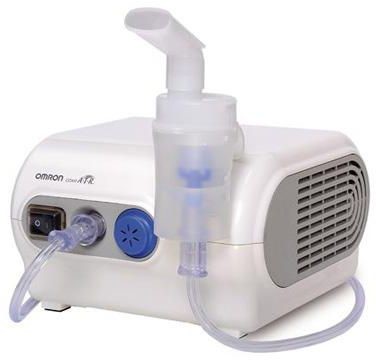
Nebulizers are primarily used in the treatment of asthma, COPD, and other breathing problems. However, it is also used for severe cases of nasal and chest congestion as it provides immediate relief by the opening of airways.
Reference: Boe J et al (2001). European Respiratory Society Guidelines on the use of nebulizers. Eur Respir J. 18(1):228-42.
Click here to find out more about Omron’s nebulizers.
Different Types Of Nebulizers for various uses
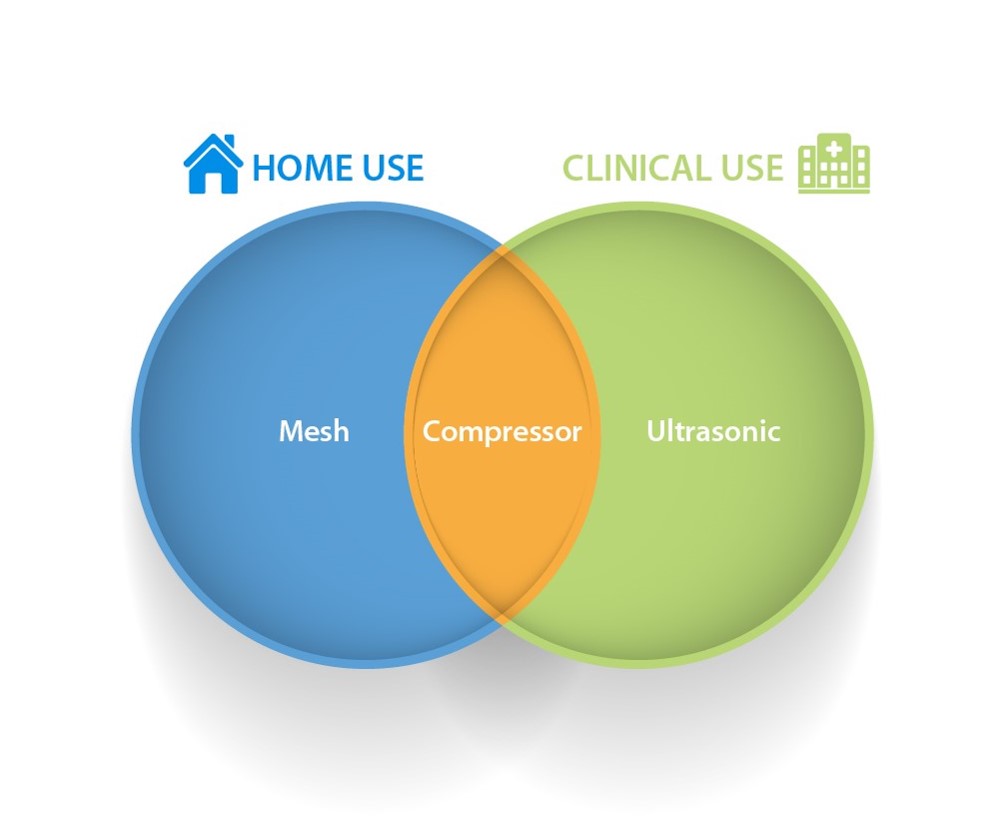
1. Compressor Nebulizer
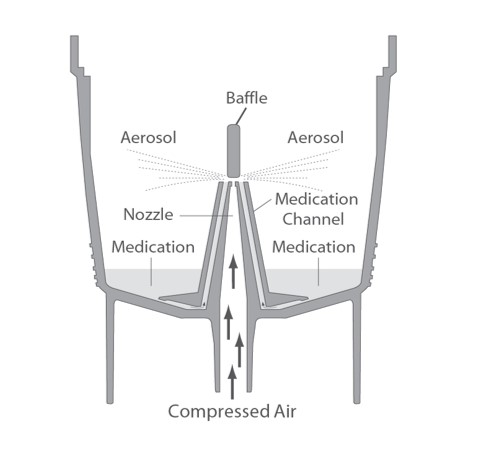
Benefits
- Easy to use, also suitable for childrenDisadvantages
- Bulky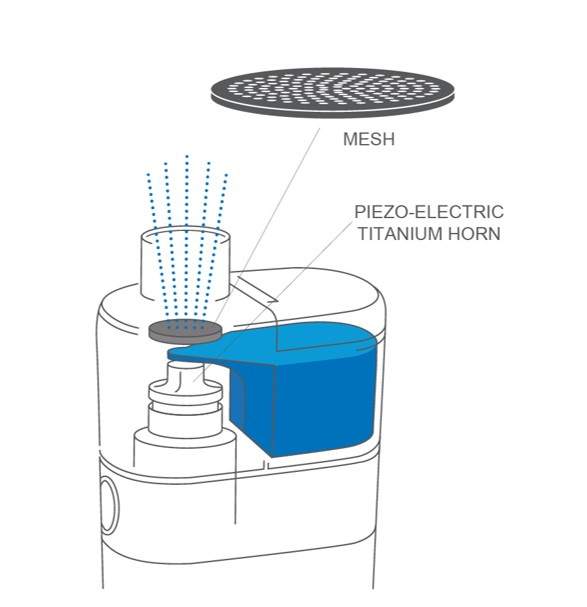
Benefits
- PortableDisadvantages
- Relative high costs3. Ultrasonic Nebulizers
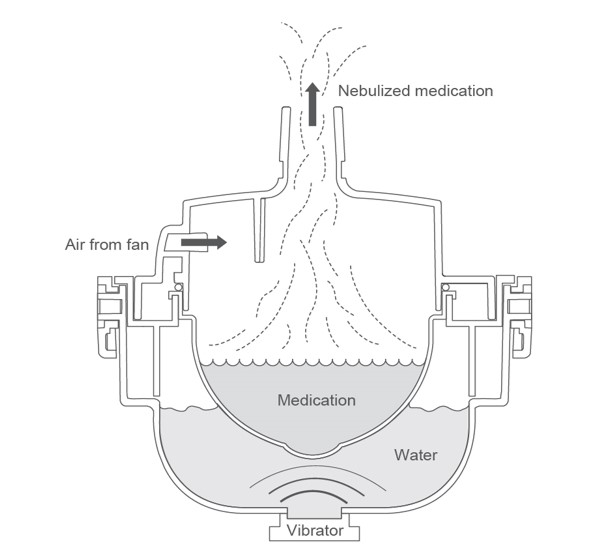
Benefits
- Quiet and easy operationDisadvantages
- More expensive than a Compressor NebulizerDistilled water or purified water cannot be used alone as a drug solution for nebulization.
Key Features Of A Nebulizer
1. Median Mass Aerodynamic Diameter (MMAD µm)
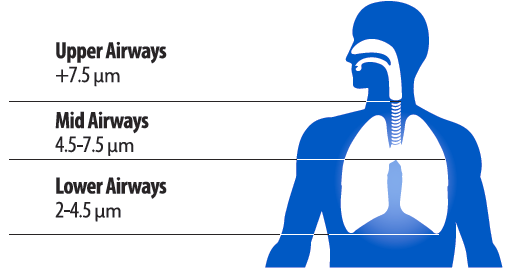
Nebulizers create aerosol droplets with a range of particle size diameters, and MMAD is the diameter that divides the mass of an aerosol in half . MMAD is one of the recommended parameter from European Respiratory Society for measuring nebulizer performance.
Upper Airways:
Chronic – Allergic Rhinitis (Hay Fever)
Infections – Rhinitis (Common Cold), Sinusitis, Laryngitis
Lower Airways
Chronic – Asthma, COPD
Infections – Bronchitis, Bronchiolitis, Pneumonia
2. Speed
Higher nebulization rate = Shorter treatment time
Nebulization rate is the amount of nebulized medication in ml coming out of the nebulizer per minute.
3. Aerosol Output
Amount of medication deposited in the lungs. It is measured using a breath simulator pump connected to a filter (chemical analysis of NaF in the filter)
It is a key parameter of Nebulizer efficiency.
4. Noise Level
Babies and children may be fearful of the noise generated by compressor type nebulizers therefore a mesh or ultrasonic nebulizer may be more ideal.
5. Portability
Recommended for cases where on the go treatment is needed.
1. Who will be using the nebulizer?
Adults or Babies or Children
2. What is the condition?
Upper Airways or Lower Airways
Depending on the treatment area, the nebulizer should produce partical size to reach the targeted organ.
3. Where will the nebulizer be used?
At Home or On-The-Go
Compact and lighter nebulizers make it easy to have discreet treatments anywhere.
Click here to find out more about Omron’s nebulizers.
Common Misconceptions About Nebulizers
#1 The Bigger And/Or Louder The Nebulizer, The More Powerful It Is.
The size and the noise level of the nebulizers are dependent on the technology it was developed with. According to the European Respiratory Society (ERS) guidelines, particle size, aerosol output and aerosol output rate are the key performance indicators.
#2 The More Mist Produced, The More Effective The Treatment.
Visibility of the aerosol produced is dependent on the particle size. Higher mist visibility suggests larger particle size, which is suitable for upper airway treatment. Whereas, most asthma medication targets the lower airways. Look for nebulizers that produce the right sized particles (MMAD) for the most effective treatment.
#3 One Nebulizer Can Treat Both Airways
Not every nebulizer comes with the capability to target both airways. Some nebulizer models have the added feature to adjust the particle size produced. Select your nebulizer based on your target treatment area.


